Ownership is three separate things: the domain name, the hosting account, and the site files. You own your website only if the domain is registered in your name, the hosting account is in your name, and you can get a copy of the files. If any of the three sits in someone else’s account — an agency, a platform, a nephew — you are renting, whatever the invoice says.
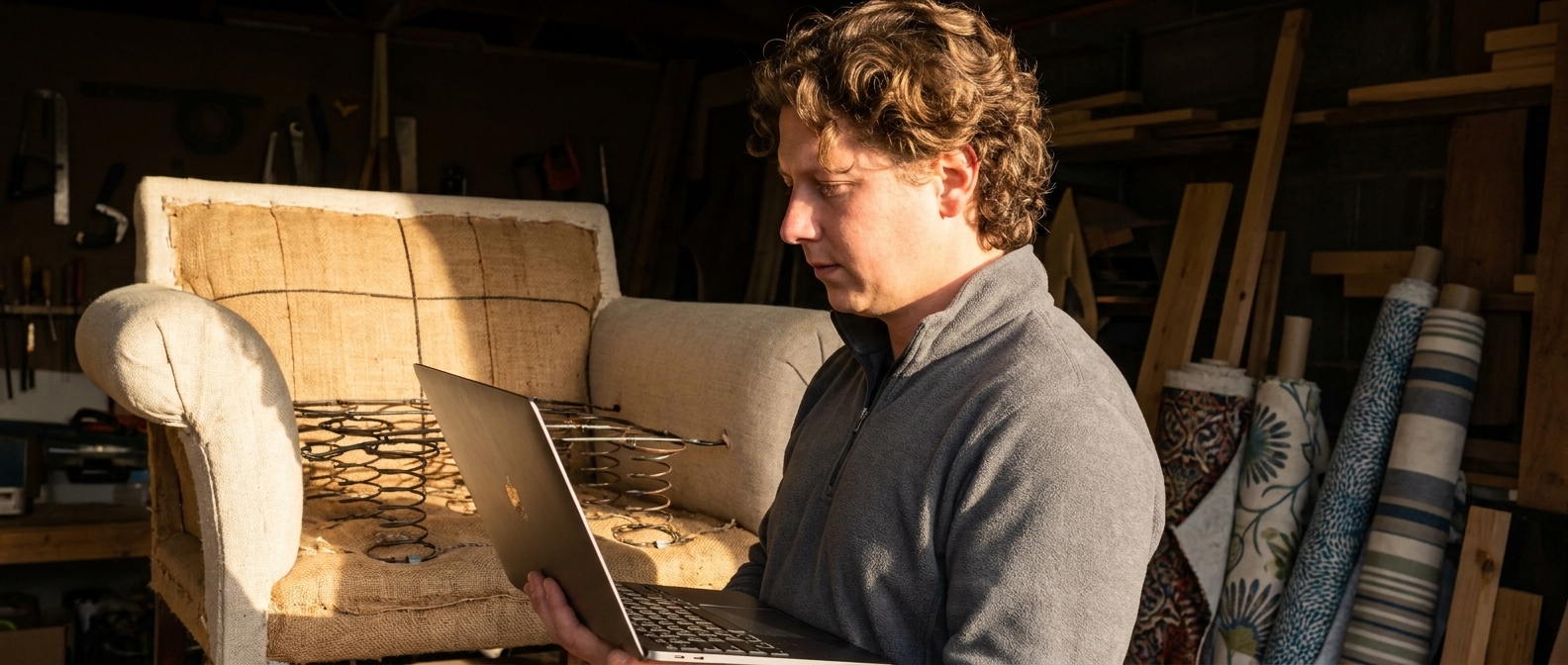
A guy who reupholsters furniture asked me this last month, and he asked it in the worst possible way: past tense. His site had gone down. The man who built it eight years ago had stopped answering emails. He didn’t know who the host was, didn’t know where the domain was registered, and the only login he had was for a WordPress dashboard that no longer loaded.
Twelve years of reviews, photos of every piece he’d restored, and the phone number every customer had bookmarked. All of it inside an account belonging to somebody who’d moved on with his life.
Here’s the thing. He hadn’t been scammed. Nobody stole anything. He just never asked whose name was on the paperwork, and eight years later the answer mattered more than anything else about the site.
“You don’t find out who owns your website on a good day. You find out the day it goes down.”— Vincent Jordan
So let me split it into the three pieces, because people say “my website” like it’s one object and it never is.
The domain is your address — the thing on your van and your business cards. It lives at a registrar, and whoever’s name and email are on that registration controls it. This is the one that actually matters, because a domain is the only piece that can’t be rebuilt. Lose the files and you rebuild in an afternoon. Lose the domain and every card, sign and Google result you’ve ever earned points at somebody else’s property.
The hosting is the space the site sits in. Same rule: whose name is on the account, whose card is on file, who gets the renewal email. If you can’t log in and download a backup, you don’t control it.
The files are the pages themselves. On a platform builder there often aren’t any files to hand over — the site only exists inside their system, which is why leaving means starting over rather than moving. On WordPress it’s a folder and a database you can copy and take anywhere.
So what should you actually do?
Go check, right now, before you need to know. Three questions: what registrar is my domain at, and is my name and my email on it? Whose hosting account is this, and can I log in? Can I download a full backup today without asking permission?
If a builder or agency holds any of it, ask them to transfer it to accounts in your name. A good one will do it the same week — it’s normal, and they’ve done it before. If someone resists, you’ve learned the most important thing you could have learned about that relationship, and you’ve learned it while the site is still up.
And when you build the next one, build it somewhere you hold the keys. Designer Talk is an AI page builder that lets you build WordPress pages by describing them in plain English — no drag-and-drop, no design skills. It runs inside your own WordPress install, on your own hosting, on your own domain — which means the thing you make is yours in all three senses above. Get started with Designer Talk today. Set your colors and font once in Brand Settings, then talk to it. Here’s the flow, for a fictional upholstery shop in Vermont:
create a hero section for Marlowe and Sons Upholstery — headline Furniture Restoration and Custom Upholstery in Burlington, a line that we have been reviving heirloom pieces since 1998 and give free in-shop estimates, our phone (802) 555-0146, and a Get an Estimate button.
Now the photo — photos never go in the section prompt. Hit the + button in the section chat, choose Generate Image, and describe the shot:
An old armchair stripped to its frame on a workshop bench, rolls of fabric stacked behind it, warm afternoon light through a dusty window, no people.
It saves straight to your Media Library. Click Insert, tell the section “use this as the hero background,” then keep talking until it sounds like you:
Add a line that we do antique and mid-century pieces.
Make the phone number bigger.
Put the years in business under the headline.
Swap in photos of your own work as you get them. And put a note in your phone with the registrar, the host, and where the backup lives — ten minutes now, so that the day something breaks, the answer to “who owns my website” is boring.
Describe the pages in plain English — on your own domain, your own hosting, your own WordPress.
Get Started Today