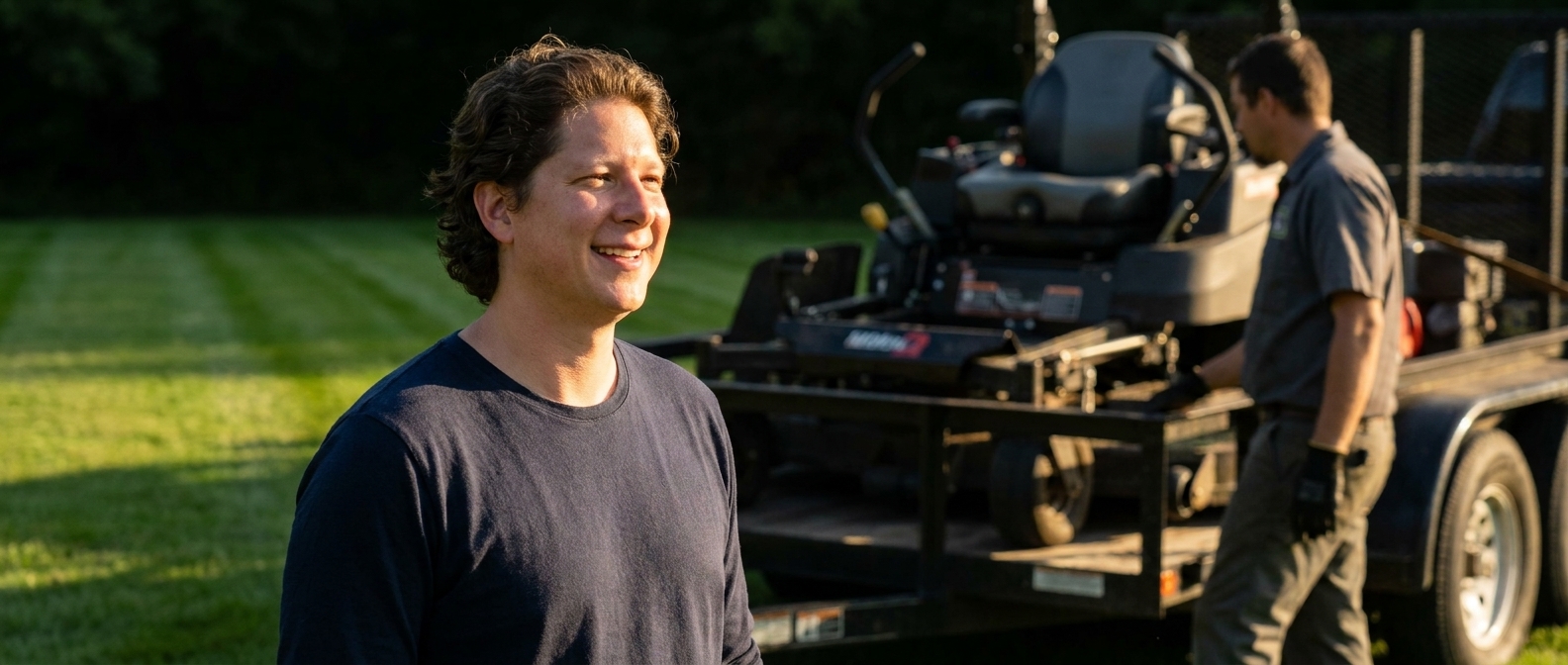
You can build a complete landscaping website in about an hour by describing each section in plain English to an AI page builder — no code, no drag-and-drop, no designer. Below is the full playbook: the seven sections a landscaping website actually needs, the exact prompts that build each one (copy and paste them), what it costs compared to hiring an agency, and answers to the questions landscapers ask most.
Why most landscaping businesses still don’t have a real website
Landscaping is one of the most visual trades there is — nobody hires a landscaper without seeing the work first. Yet a large share of landscaping businesses still run on a Facebook page and word of mouth. The reasons are always the same: the owner is outside working all day, the agency quotes came back at $3,500–$10,000, and the DIY builders assume you want to spend your evenings dragging boxes around a screen.
Meanwhile, when a homeowner in your service area searches “landscaping near me” — or asks ChatGPT who they should call — the jobs go to whichever company shows up looking established. A one-page website with your services, your photos, your reviews, and a quote form is the difference between being findable and being invisible. In 2026, that page takes an afternoon, not a month.
Can AI really build a landscaping website?
Yes — and the workflow is simpler than most people expect. Designer Talk is an AI page builder that lets you build WordPress pages by describing them in plain English — no drag-and-drop, no design skills. You type what you want a section to look like, the same way you’d text a customer about a job, and the section appears in a live preview. Don’t like the color? Say so. Want the phone number bigger? Say that. Each section is its own conversation, so you refine one piece at a time without breaking the rest of the page.
The pages it produces are real WordPress pages on your own domain — not a subdomain on someone else’s platform. You own the site, the content, and the hosting.
“If you can describe your work to a customer, you already have the only skill this requires.”— Vincent Jordan
What does a landscaping website actually need?
Not twenty pages. Seven sections, in this order. This is the anatomy of a landscaping site that books jobs, and each one maps to a section type Designer Talk builds:
| # | Section | Why it matters for a landscaping business |
|---|---|---|
| 1 | Header with phone number | Landscaping customers call. Your number should be visible at every scroll position. |
| 2 | Hero with one clear button | Who you are, where you work, and a single action: Get a Free Quote. |
| 3 | Services grid | Mowing, hardscaping, irrigation, cleanup — this tells both Google and customers exactly what to hire you for. |
| 4 | Before-and-after gallery | The section that actually sells. Your finished yards are your pitch. |
| 5 | Reviews | You already have Google reviews. Put your best ones on the page you control. |
| 6 | Quote form | Name, phone, address, what they need. Every extra field costs you leads. |
| 7 | Seasonal offer popup | Landscaping is seasonal — your website should act like it. “Spring cleanup slots open now” converts. |
That’s the whole site. Add pages later when a service takes off — an irrigation page, a commercial-contracts page — but this one page does the job of a $10,000 build.
The exact prompts to type (copy and paste these)
These are real prompts, in build order, for a fictional company — GreenCrew Landscaping in Austin, Texas. Swap in your business name, your town, and your phone number, and type them into Designer Talk one at a time. What you get won’t be identical to anyone else’s site — the AI designs each section fresh — but it will match what you asked for.
Create a sticky header for GreenCrew Landscaping with the logo on the left, links to Services, Our Work, Reviews, and Contact, and the phone number (512) 555-0142 next to a green “Get a Free Quote” button on the right. Keep it clean and easy to read on a phone.
Create a hero section for GreenCrew Landscaping in Austin, Texas. Full-width photo background of a beautifully landscaped backyard, a big headline about transforming outdoor spaces, a line saying we serve Austin and surrounding areas, and one large button that says “Get a Free Quote” that scrolls down to the contact form.
Create a services section with six cards: Lawn Care & Mowing, Landscape Design, Hardscaping & Patios, Irrigation Systems, Tree & Shrub Care, and Seasonal Cleanup. Each card gets an icon, a two-sentence description, and a “Get a quote” link. Use the green from the header as the accent color.
Create a portfolio section called “Our Work” with a grid of before-and-after project photos. Each project gets a short caption with the neighborhood and the type of job, like “Backyard patio and turf — Cedar Park.” Add a line saying all photos are real GreenCrew projects in the Austin area.
Create a testimonials section with five customer reviews, star ratings, first names and neighborhoods, and a badge at the top showing a 4.9 average rating on Google.
Create a contact section with the headline “Get your free quote — we reply the same day.” Short form asking for name, phone, property address, and a dropdown for the service they need. Next to the form, show our phone number, hours, and a list of the areas we serve.
Create a popup offering 10% off spring cleanup for new customers, with a single email field and a “Claim My Discount” button. It should appear once after 15 seconds and be easy to dismiss.
Seven prompts. Read them again — there’s nothing technical in any of them. That’s the entire “how.”
Two tips from watching a lot of these builds: be specific about the one thing you care most about in each section (if the phone number matters most, say where you want it), and build top to bottom — the builder keeps sections visually consistent, and a header-first build gives everything else a style to follow.
What does a landscaping website cost in 2026?
| Option | Upfront cost | Ongoing cost | Time to launch | Who does the work |
|---|---|---|---|---|
| Web design agency | $3,500–$10,000 | $50–$200/mo maintenance | 3–6 weeks | Them — and every future change is an invoice |
| Freelancer | $800–$3,000 | Varies | 2–4 weeks | Them — quality and availability vary |
| Wix / Squarespace | $0 | $192–$588/yr, forever | Days–weeks | You, with drag-and-drop, on their platform |
| AI page builder + WordPress hosting | A fraction of an agency build | Standard WordPress hosting | An afternoon | You, by describing what you want |
The honest comparison isn’t really the money, though — it’s control. The agency site is excellent until you need a change in June and they’re booked until August. The Wix site is yours until you stop paying the subscription. The site you built by describing it, on your own WordPress install, is one sentence away from updated — and it stays yours no matter what.
Common questions
Do I need to know WordPress or any code?
No. Designer Talk runs inside WordPress, but building is entirely conversational — you describe sections, review them in a live preview, and hit publish. If you can use email, you can use this.
Will it look professional, or will it look “AI-generated”?
The sections are generated as custom-designed layouts, not filled-in templates — two landscapers typing the prompts above will get two different-looking sites. The fastest way to make it feel like your company: set your brand colors once in the builder’s brand settings, and use your real project photos in the gallery.
Does it work on phones?
Yes — every section is generated mobile-responsive, and the builder has a preview mode that shows the page at phone, tablet, and desktop sizes before you publish. For a landscaping business this matters more than most: the majority of “near me” searches happen on a phone.
Can I edit the site later, or add pages?
Any time. Every section keeps its own conversation history, so you can come back in October and say “change the popup to a fall cleanup offer” and it updates just that section. New pages work the same way — describe them.
Do I need hosting?
Yes — Designer Talk is a WordPress plugin, so you need a WordPress site, which means a domain and hosting. Any WordPress host works; if you don’t have one yet, Hostalot hosting plans work out of the box with the plugin.
Will Google actually find my site?
The builder includes an SEO optimization step that adds descriptive alt text to images, structures your headings, and generates the schema markup that helps search engines (and AI assistants) understand your pages. Beyond that, the basics still apply: name your service area in your text, keep your Google Business Profile linked to the site, and add real photos with real captions.
How long does this actually take?
Budget an afternoon for your first site: an hour of generating and refining sections, and the rest gathering your real photos and reviews — which is the part worth being slow about.
Build it this week
The seven prompts above are the whole playbook. Copy them, swap in your business name and your town, and you’ll have a landscaping website live before your next job starts. The only part worth going slow on is your photos — the prompts take an hour, but real before-and-afters of your own work are what turn visitors into phone calls.
Seven prompts, one afternoon, a website you own on your own WordPress install.
Get Designer Talk